
How to Capture the night sky
Wednesday, September 18, 2024

How to Capture the night sky
Capturing the night sky can be challenging and exciting at the same time.
This shot was taken in the Yorkshire Dales in an area of moorland between Eastby and Barden. Taken with my Canon EOS 6d and a Sigma 17-35mm lens, 20 second exposure.
You do not need to have expensive hi-tech equipment to capture the stars. Sure you can get fantastic images with the more expensive equipment but it is not essential if you are out and about and happen to see a night sky scene and want to take a photo of it.
If you have a smart phone such as a Samsung or iPhone or Sony, these even have special features for astrophotography.
I have used my Samsung S23 Ultra and got some great Milky Way pictures.
First thing you need is a tripod, but even if you don't have a tripod you can prop the phone against something.
For the settings, you need to go into your camera settings and when you see the types of camera modes along the bottom such as PORTRAIT,PHOTO. VIDEO etc so slide it along till you see MORE. This opens another screen and at the top you should see an icon for EXPERT RAW. Click on that.
On the top right is a symbol showing stars. This is the astrophotography setting.
You can set a duration of 4 minutes, which I think is about right. Any more than 4 minutes doesn't seem to make much of a difference in my opinion.
It is important to know that any slight movement at all during this exposure will completely blur out the image. So the camera has to be perfectly still. To help with this I would go into camera settings and scroll down till you see SHOOTING METHODS and click on this.
You can click on voice command and then whenever you shout a command like "Shoot" or "capture" or "smile" the photo starts.
This is an image I got from using this system.
If you have a camera such as a DSLR or a mirrorless camera you can also take some great shots of the night sky.
The main thing to know is that to capture the stars, your camera has to let in as much light as possible. So you would need a lens such as a wide angle or a prime lens (not zoom) that is under 50mm focal length. You can use a 50mm but its a bit limited and you will only get part of the Milky Way.
This was taken with a 50mm lens.
One other thing is you need to be able to take in as much light as possible, so you go into Pro mode on your camera and you need to put in the following settings:
Shutter speed needs to be anything from 10 seconds to 30 seconds.
If the shutter is open for too long, remember the Earth is moving, so you will start to see star trails. You should avoid this by using this principle.
There is an equation that you can use for this. It is called the 500 rule.
This is used by taking 500 and divide it by the focal length of your lens. Say you have a 50mm lens you divide 500 by 50 and you get 10. So the maximum exposure time to keep your shutter open is 10 seconds before the stars begin to streak..
If you have a wider 20mm lens, 500 divided by 20, you will get a maximum exposure time of 25 seconds.
This is a simple rule but not exact because it depends where you are on this planet and what direction you are shooting from. If you are at the equator looking up, the stars will be moving faster because of the earth spin, rather than further towards the poles.
But it works for a rough guide.
This blog is just an outline really and if you want to get into it fully you can message me and I can give you any advice you need as far as other settings on your camera.
I really enjoy astrophotography. I have spent many a night out in the middle of nowhere with my camera and taking in the panorama of the full night sky. There is something very peaceful about it.
One night I counted about 50 meteors in two hours. Another night I watched the Aurora for 2- 3 hours, which was unexpected.
I pick a good location during the day using Google maps and another app called stellarium.
I can also give any advice on these if you message me.
I hope this has been useful for anyone who wants to take an adventure into the night sky.
Danny
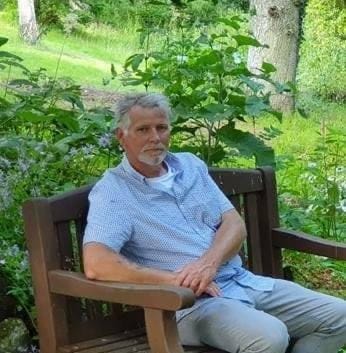
Hi, I'm Danny Fitzgibbon
Danfitz Photography
I have articles here that will help you get the basics about learning photography.
There'll be links in here also to tools I use whilst out and about.
Have a read and see what's good and keep reading because I'll be updating this section on a regular basis!
dan@danfitzphotography.com
SOCIAL
